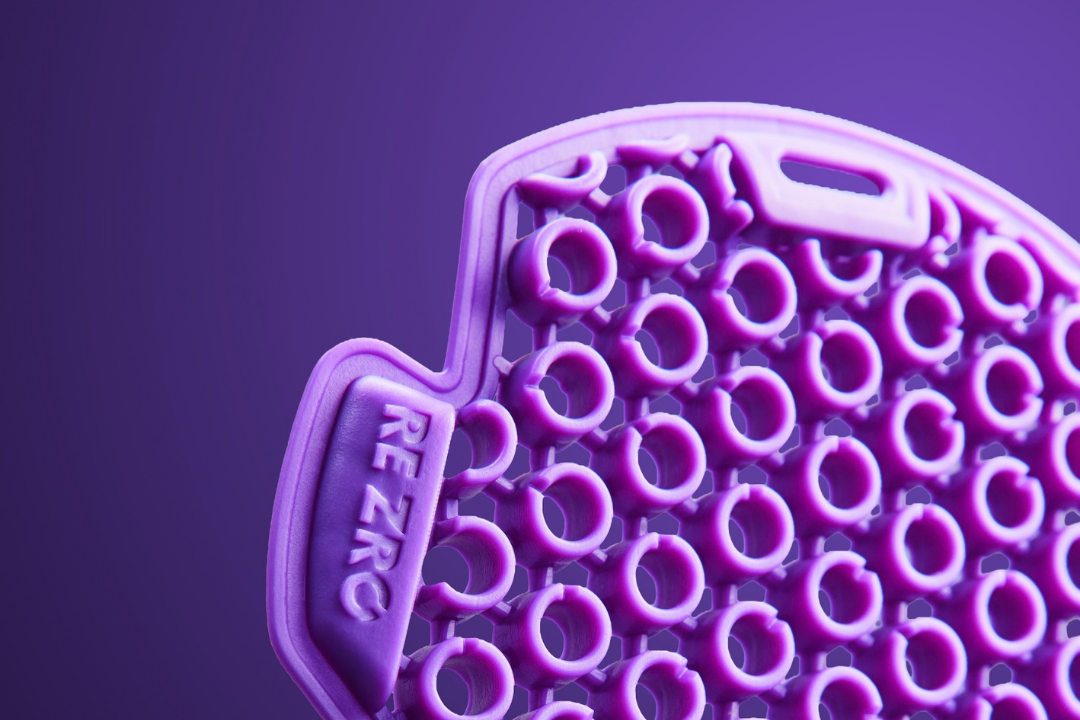
Most fluids we encounter daily, like water, are Newtonian fluids. No matter how hard you stir water, its viscosity (thickness) stays exactly the same. However, impact protection, such as RE ZRO® armour, uses non-Newtonial fluids - materials that behave differently to those we commonly use.
Non-Newtonian fluids come in multiple forms: shear thickening and shear thinning. Traditionally, armour uses shear thickening, at RE ZRO® our armour is shear thinning, and this technology is one of the ways we can create industry leading impact protection.
While many people will have heard of shear thinning armour, and seen it as a description of our products, this blog post breaks down everything you need to know: from traditional shear thickening, how shear thinning works, to how it makes RE ZRO® armour different.
Shear Thickening: how traditional armour works
Scientifically speaking, the viscosity of shear thickening technology changes based on the amount of stress or speed applied to the material.
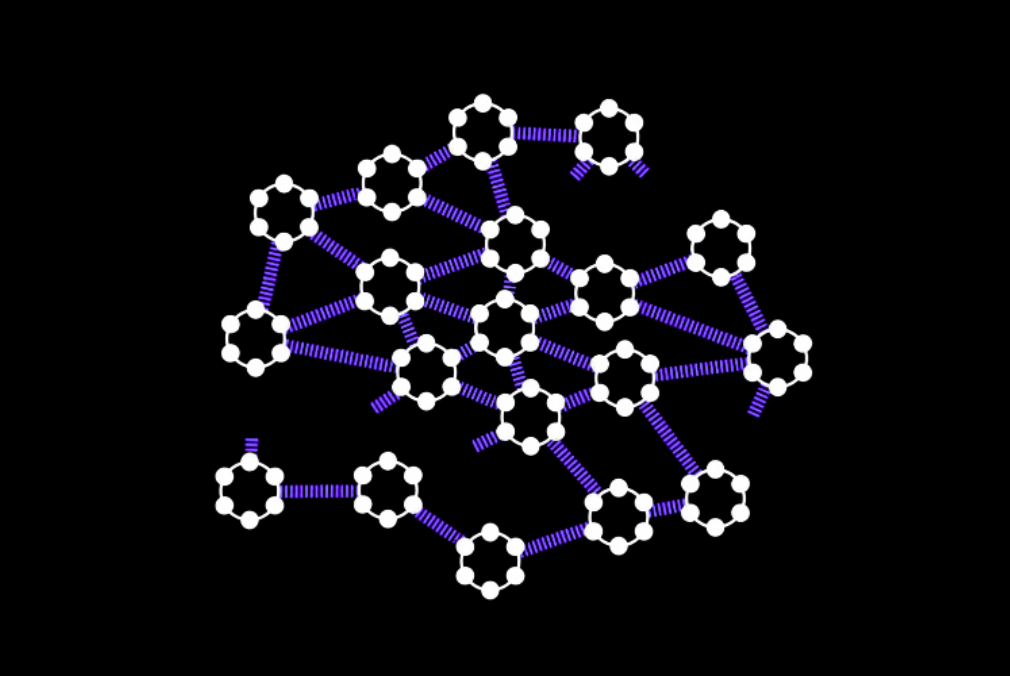
At Rest: The molecules or microscopic particles inside the material have time to move out of each other's way. The material behaves like a relaxed liquid or flexible gel.
Under Dynamic Impact: The sudden energy gives the particles no time to reorganise. Instead, they lock up tightly, mimicking the behavior of a rigid solid.
In plain English, imagine a piece of soft gel that you can easily squeeze in your hand. Now imagine that if you hit it with a hammer, it instantly turns as hard as a brick for a split second, stops the blow, and then immediately goes back to being soft gel. This is shear thickening technology.
When it comes to impact, the protection comes from the absorption of the energy, the material forcing the impact to spread out across a wider surface area, and an instant transformation into a hard barrier.
Shear Thinning: how it works
Unlike the conventional shear thickening technologies, shear thinning softens on impact. Technically speaking, shear thinning material’s viscosity decreases as force is applied. This means that under increasing strain or deformation, the material flows more easily. Once the stress is removed, the material recovers its original viscosity.
Put simply, when a force is applied to the shear thinning materials, the structure re-arranges to allow the impact to flow through, absorbing the force. Once the impact is gone, the material reforms to its original structure.
A great example of shear thinning is ketchup - when you first turn the bottle upside down, it doesn't come out right away. But if you shake or squeeze it, it suddenly starts flowing smoothly.
It happens because the tiny particles in the liquid rearrange themselves when force is applied, making it easier for the liquid to move. Once you stop applying force, the liquid slowly thickens back to its normal state.
Shear Thinning in RE ZRO® armour
So, how does this work in your impact protection?
In science terms, RE ZRO® armour is a solid-state shear-thinning material, meaning that rather than behaving like a liquid, it undergoes structural reorganisation at a microscopic level under force.
At rest or under low stress: The material retains a structured, high-viscosity state, providing form and comfort.
Under impact (high stress): The internal molecular structure temporarily reduces its resistance, allowing for rapid force dissipation over a larger area. This prevents high-impact forces from concentrating in one spot, reducing injury risk.
After impact: The material quickly returns to its original state, making it reusable for continuous protection.
This differs from shear-thickening materials (like cornstarch in water, and a lot of other impact protection), which increase in viscosity under stress. Instead of becoming rigid, the materials allow energy to be absorbed and spread efficiently, reducing transmitted force while maintaining flexibility.
This is one of the reasons our armour is so comfortable; instead of hardening against you in the case of an impact, our armour stays soft, moving and flexing with you when it matters most.
Pretty cool, right?
References
Liu, Y., et al. (2023). Shear Thickening Fluid and Its Application in Impact Protection. MDPI Polymers. shock absorbers Available at: https://pmc.ncbi.nlm.nih.gov/articles/PMC10220914/ .
Cao, D., et al. (2022). Shear thickening fluids and their applications. Materials & Design (ScienceDirect) Available at: https://www.sciencedirect.com/science/article/pii/S0264127522001915
Shear Thinning - An Overview (Science Direct) Available at:https://www.sciencedirect.com/topics/engineering/shear-thinning