.png)
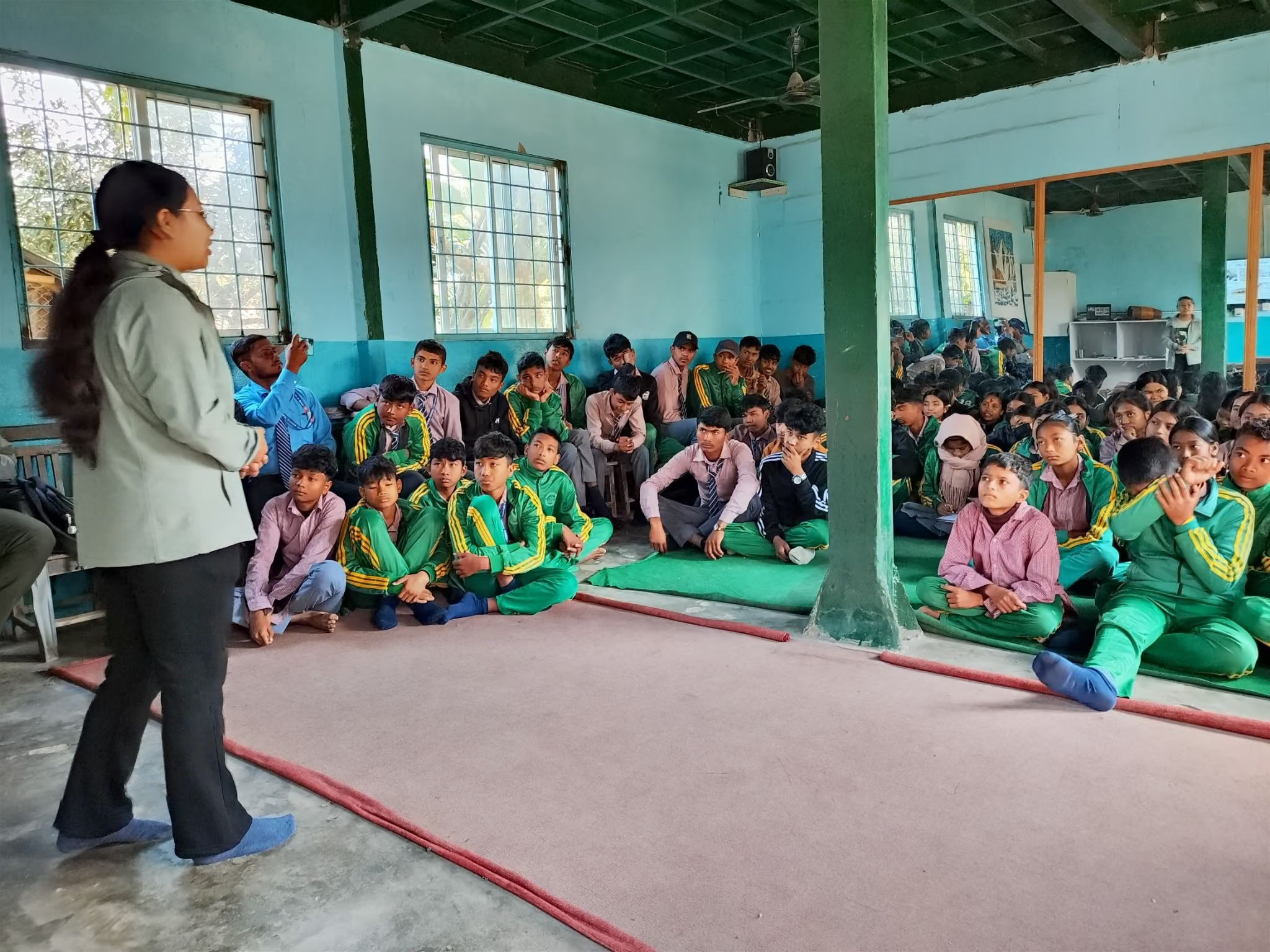
At RE ZRO®, responsibility does not stop at the product. What happens beyond the point of use matters just as much as performance on impact. That same thinking is what drives our continued partnership with the European Outdoor Conservation Association.
Over the past year, we have supported EOCA’s conservation project in Nepal, working alongside the National Trust for Nature ConOver the past year, we have supported EOCA’s conservation project in Nepal, working alongside the National Trust for Nature Conservation in the Annapurna region. The initiative focused on protecting the endangered Asiatic wild dog, while building a more sustainable framework for adventure tourism through the development of dedicated mountain bike trails and cycling infrastructure.
For RE ZRO®, that connection matters. The outdoor and MTB communities are at the heart of many of the environments we help protect through our partners and products. Creating managed trail systems helps reduce habitat damage caused by uncontrolled riding, while giving local communities new opportunities through sustainable tourism.
Now, as the project reaches completion, the results speak for themselves.
Real impact on the ground
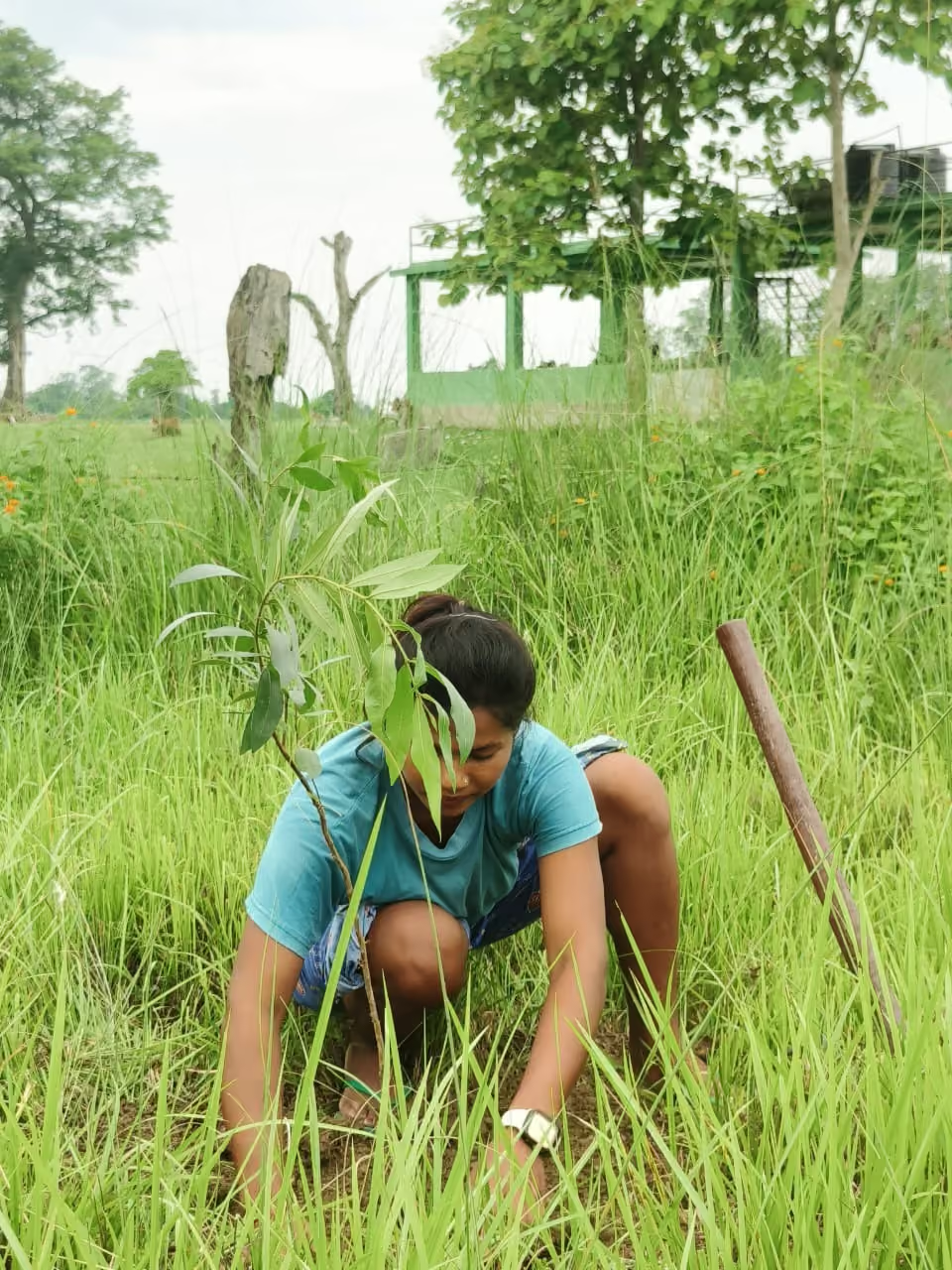
This was not a surface-level intervention. It delivered tangible environmental and community outcomes:
- 90 hectares of grassland managed using sustainable methods, replacing fire-based practices
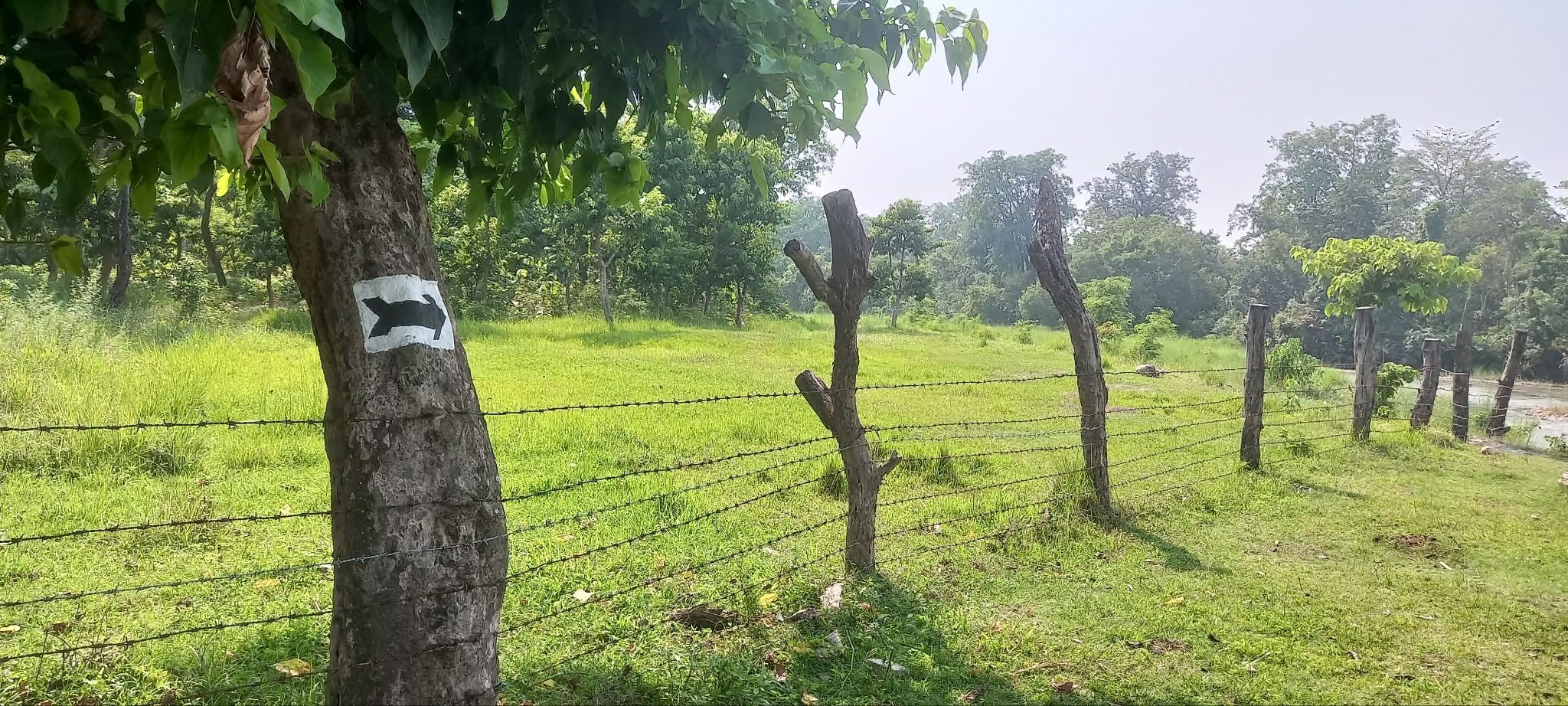
- 6km of dedicated cycle trails built to reduce off-trail damage and support responsible tourism
- 25 mountain bikes distributed for both eco-tourism and wildlife monitoring
- 32 local farmers trained in composting to improve long-term land management
- 25 local mechanics trained to maintain bikes and support the new infrastructure
Beyond infrastructure, the project leaned heavily into education and engagement:
- 180 local participants and 50 school children involved directly in planting initiatives
- 1,000 households and 1,200 school children reached through wildfire awareness campaigns
- 6 large information boards, 50 trail signs and 6,000 educational posters produced and distributed
This is what meaningful sustainability looks like. Not a single moment, but a system that continues to work long after the initial investment.
Why it matters to RE ZRO®
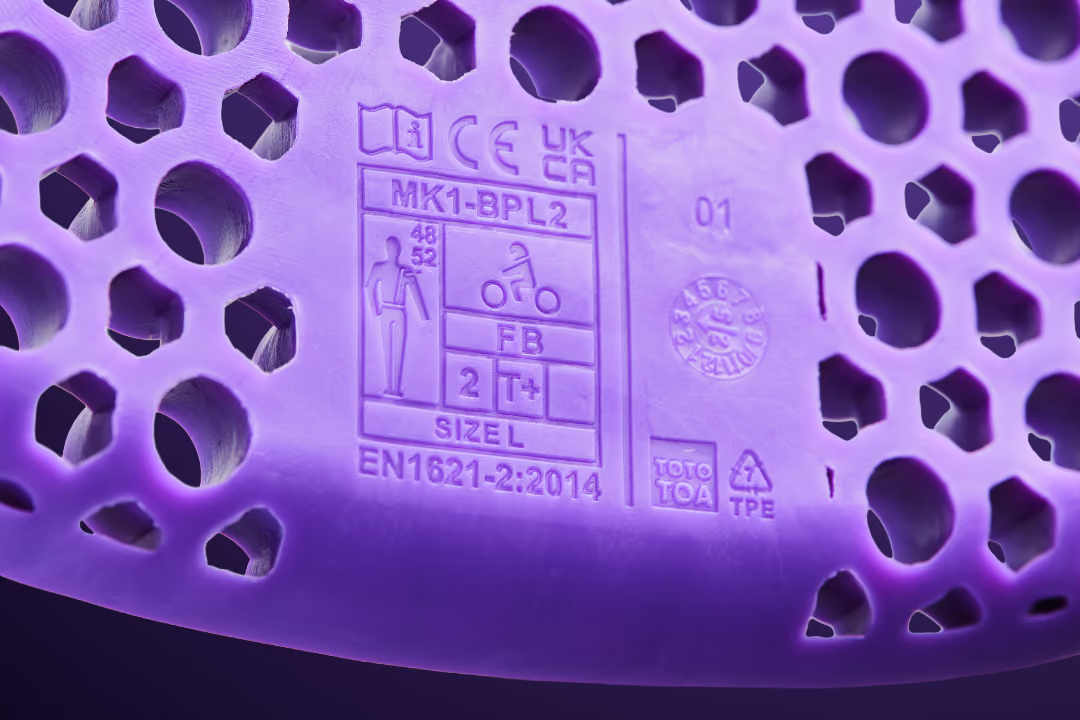
At our core, RE ZRO® is built on the idea of protecting the future of our planet. Our materials are designed to return to ZRO at end of life, but that mindset extends further than product design.
Supporting EOCA allows us to take that principle into the environments our partners and riders rely on. It connects material innovation with real-world impact. Protection that performs, and a responsibility that holds up alongside it.
Continuing the work
Following the success of the Nepal initiative, RE ZRO® is proud to continue our partnership with EOCA for another year.
This is not a one-off project. It is part of a longer commitment to backing conservation efforts that are measurable, grounded, and built to last.
As we continue to develop materials that perform better and reduce impact, partnerships like EOCA ensure that progress is not just theoretical. It is visible, practical, and happening on the ground.





.svg)
.svg)
